
One of the most consistent rituals in curling happens before the first stone is thrown, and after the final score is recorded.
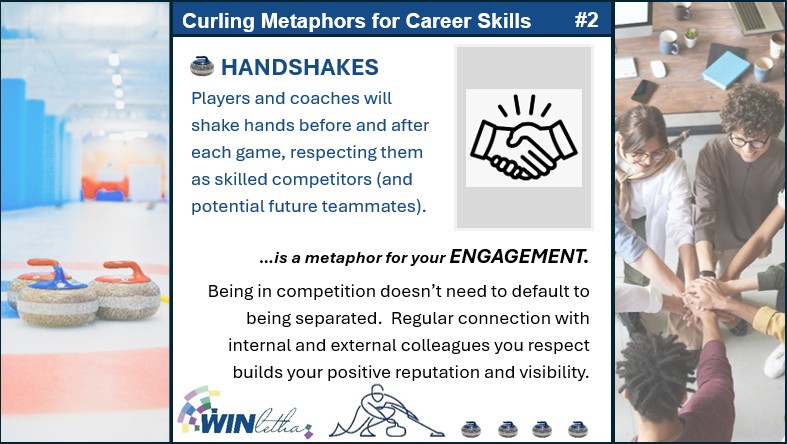
Players and coaches make a point of shaking hands.*
It’s not in the rule book.** It’s not a moment for intimidation or bravado. It’s often not caught on television. They shake hands because each person on the ice is recognized as a skilled competitor and a respected member of the community.
In a sport where today’s opponent could be tomorrow’s teammate, respect isn’t optional. It’s foundational.
What the handshake really signals
The handshake isn’t about politeness. It’s about engagement.
It says:
- I see you.
- I respect the work you’ve put into being here.
- We can compete fully without becoming adversaries.
That mindset shapes how curlers interact during and after games – sharing observations, laughing about missing a shot by a fraction of an inch, and often building friendships across teams and countries.
The workplace version of the same moment
Most professional environments are competitive in some way:
- Limited promotions
- Scarce resources
- Sales targets
- Recognition and visibility
It’s easy to treat competition as a reason to withdraw, disengage, or keep relationships transactional.
But careers, like curling, are long games.
The colleague you “compete” with today may:
- Be your manager next year
- Sit on a future hiring panel
- Refer you to an opportunity you didn’t know existed
- Become a client or partner later in your career
Engagement isn’t about being overly friendly or performative. It’s about maintaining genuine, consistent connection, especially when stakes are high.
Engagement builds reputation when no one is watching
Your professional reputation isn’t built only through results. It’s shaped by:
- How you treat peers under pressure
- Whether you stay connected even when outcomes don’t go your way
- How you acknowledge others’ skills and contributions
Just like in curling, the moments before and after the “game” often carry more long-term weight than the score itself.
A small practice with outsized impact
You don’t need a formal ritual to apply this lesson.
Simple acts of engagement make a difference:
- A quick check-in after a tense project
- Publicly recognizing a competitor’s good work
- Staying connected with colleagues you respect, even when paths diverge
These moments build trust, visibility, and goodwill over time.
As the Games continue…
This is the second in a 20-day Olympic curling series exploring career and leadership lessons inspired by small details of the sport.
Tomorrow, we’ll shift from engagement to control and the impact of the big black line across the ice sheet.
Until then, compete fully… and respectfully. 🥌
* You may see alternatives to the handshake, like a fist, forearm, or elbow bump, especially if there are concerns about illness spreading among the athletes.
** Welcome to the deep weeds again. While there isn’t a specific rule about handshakes, there is a written description of The Spirit of Curling. It includes statements like “Curlers play to win, but never to humble their opponents.” and “While the main object of the game of curling is to determine the relative skill of the players, the spirit of curling demands good sportsmanship, kindly feeling and honourable conduct.”